The Arnold Split in DropSet: double progression, screen by screen
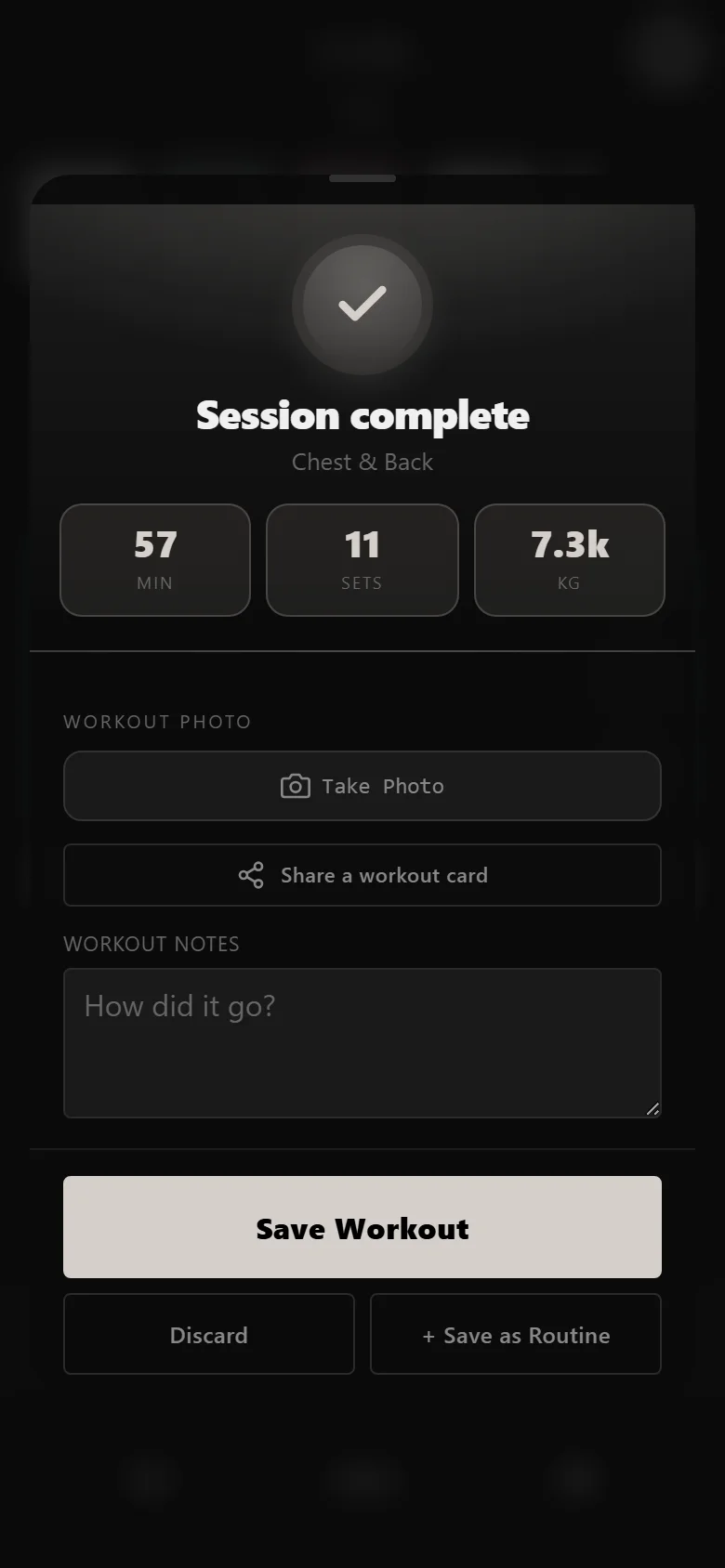
The Arnold Split is a classic for a reason: three muscle pairings — Chest & Back, Shoulders & Arms, Legs — each trained twice a week, six sessions in all, with the Chest & Back day built on antagonist supersets. It is a high-volume, advanced routine, and every lift on it runs double progression: you work inside a rep range, and the weight only rises once you top that range on every set.
That makes it a different animal from a straight linear progression, and a better test of what an app should do for you. This run follows the squat — 4 sets of 6-10, trained twice a week on the Legs day — from 145 kg to 165 kg, through one missed session on the way. Every weight and estimate below is computed by the real engine, and the numbers count the squat's appearances rather than calendar weeks.
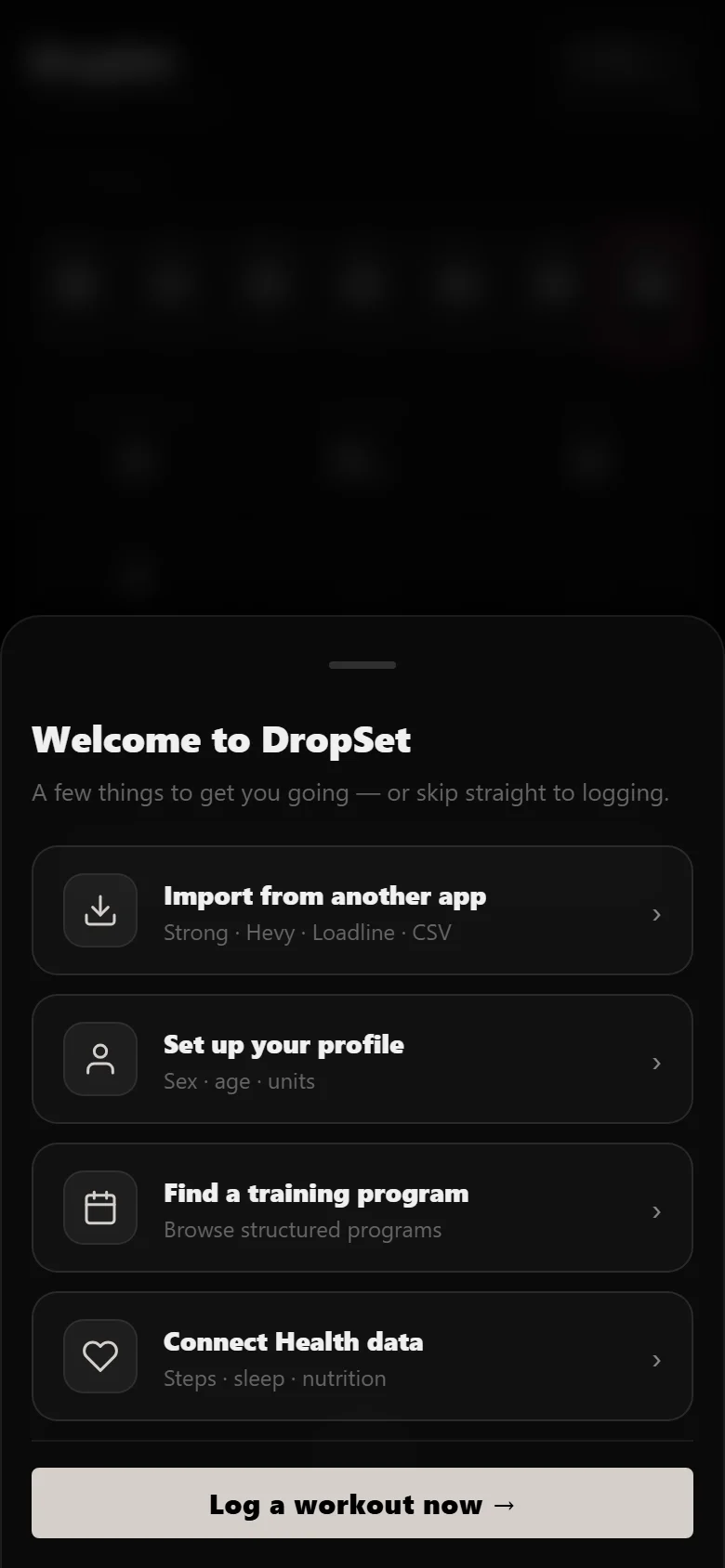
Starting the program
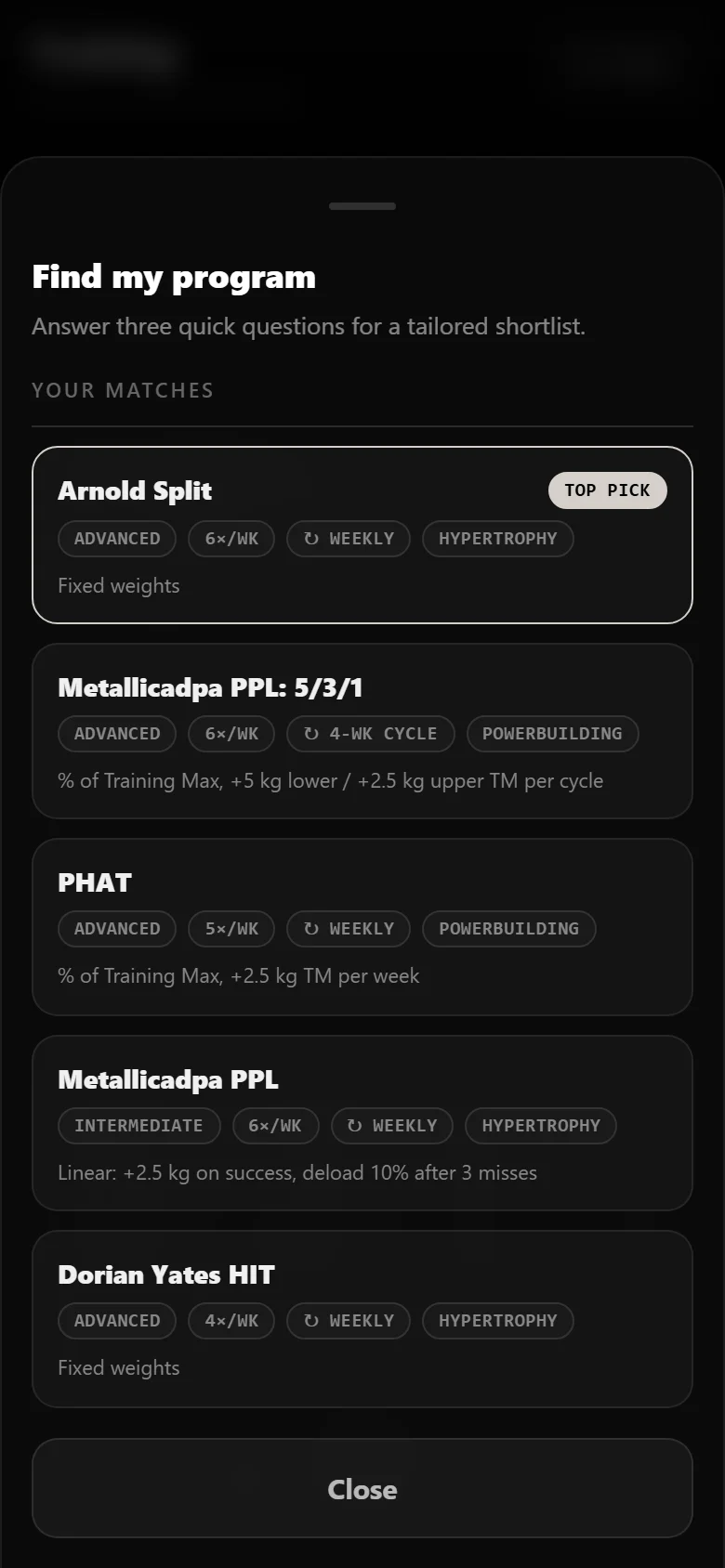
The finder asks three questions — goal, experience, days per week — and returns a shortlist. Six days a week and a hypertrophy goal puts the Arnold Split at the top of it.
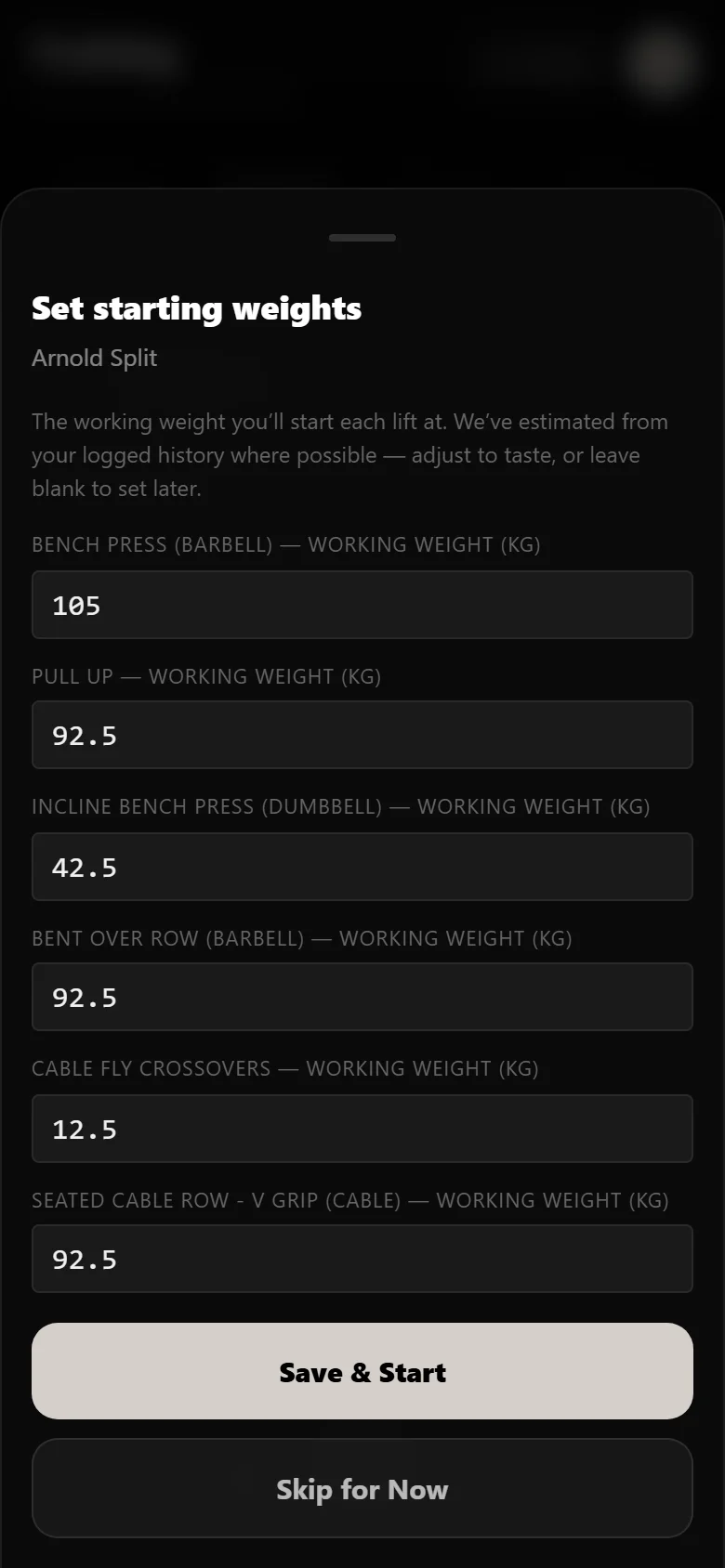
There are no training maxes to work out. Double progression runs off a working weight per lift, so the app asks what you can currently do and starts there — 145 kg on the squat for this lifter, with every accessory from the Arnold press to the wrist curls getting its own starting weight on the same screen.
The squat appears twice a week on the Legs day, which is why it is the lift this article follows and why the arc below counts appearances — six of them across three weeks.
Double progression — reps first, then weight
Every lift on the Arnold Split is prescribed as a rep range: the squat at 6-10, most accessories at 8-12 or 10-15, the calves and forearms up at 15-20. The rule is the same everywhere — the weight stays put while you add reps inside the range, and only once every set reaches the top does the weight go up and the reps drop back to the bottom.
The app does all of that reading for you. Log your sets, and it decides whether next session is the same weight with more reps to chase, or a heavier bar. Big lower-body lifts move in 5 kg steps; the smaller lifts move in 2.5 kg steps, because a 2.5 kg jump on a lateral raise is a different beast to one on a squat.
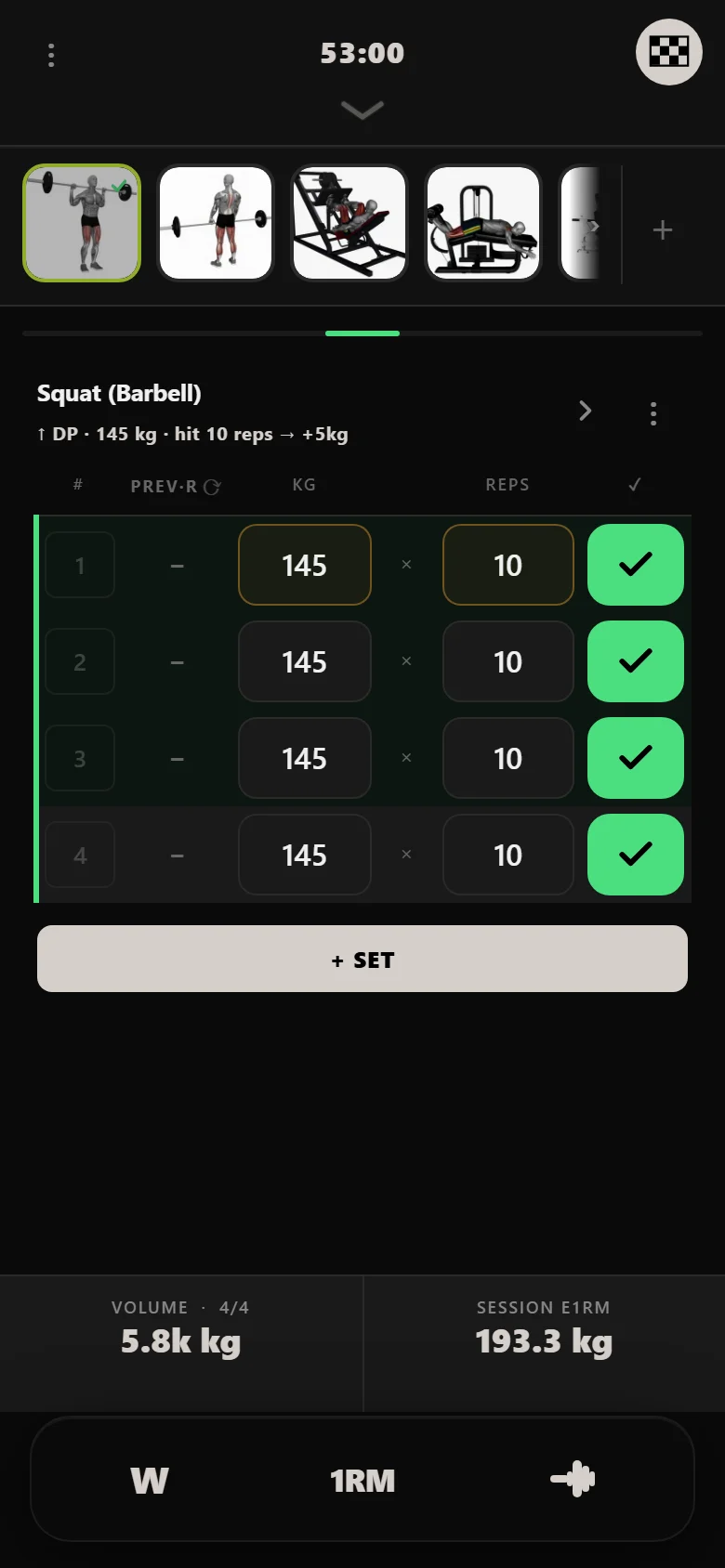
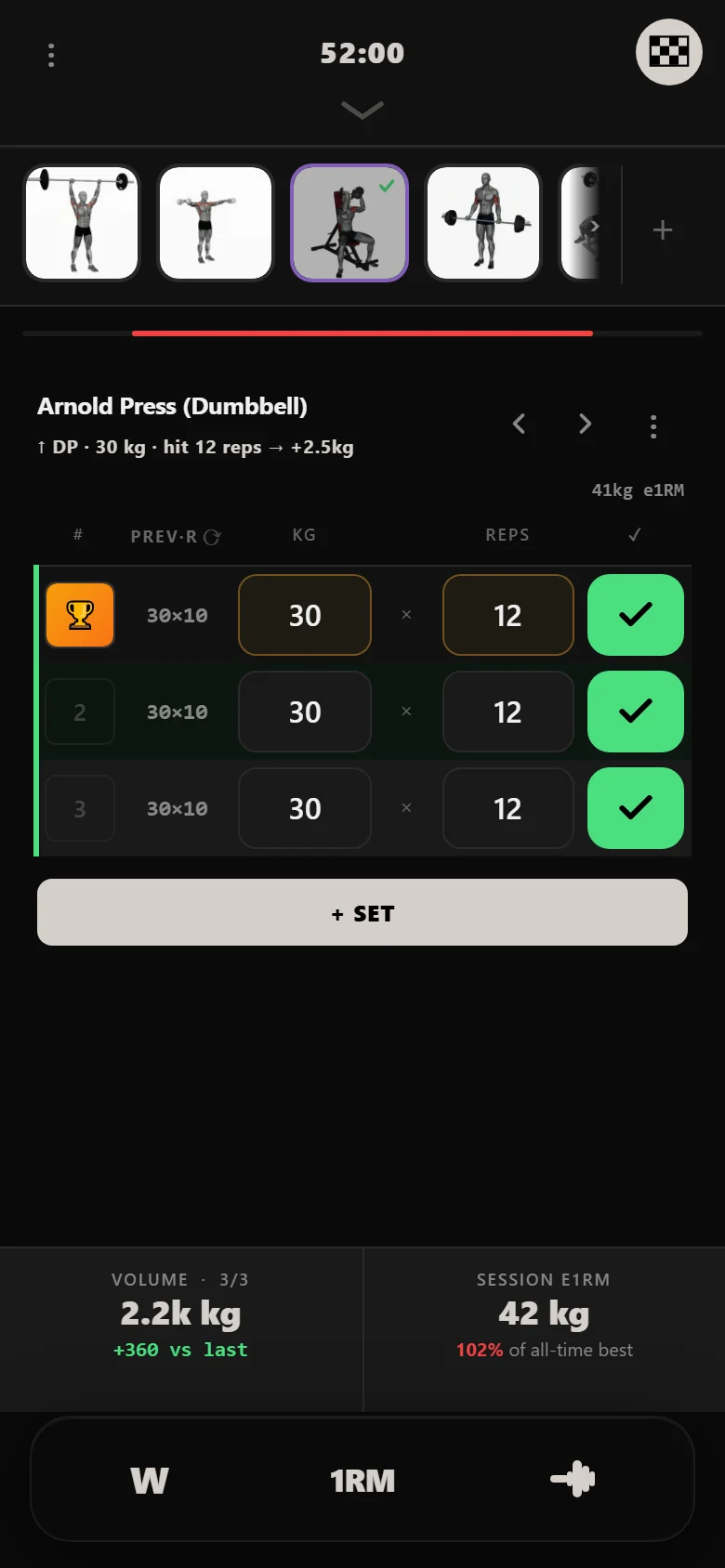
The chip beside each exercise shows the range and the rule while you train, and the PREV column shows exactly what you did last time — which, on double progression, is the number you are trying to beat.
The stall — the weight holds until you clear it
The squat opens at 145 kg and tops its range on every set, so the app moves it: 150 next time out, then 155. On the third appearance the reps fall short — and the app does the one thing that matters here: it holds. The weight stays at 155 kg for the next Legs day rather than climbing, because you didn't complete what was asked.
The next appearance clears 155 kg across all four sets, and the climb resumes — 160, then 165. One missed session never became the two-in-a-row that triggers the automatic 10% deload, so none was applied. You repeated the weight until you beat it, and the app tracked exactly where you were the whole time.
That deload rule sits behind every lift on the program, not just the squat: miss the same weight twice in a row on any of them — squat or seated calf raise — and the app takes 10% off and lets you build back through the range.
Squat — weight on the bar, per appearance (Legs day, twice a week)
- 145S1 Session 1
- 150S2 Session 2
- 155S3 Session 3 — 155 missed — weight held
- 155S4 Session 4 — cleared 155 on the second attempt
- 160S5 Session 5
- 165S6 Session 6 — 170 prescribed next
What it looks like afterwards
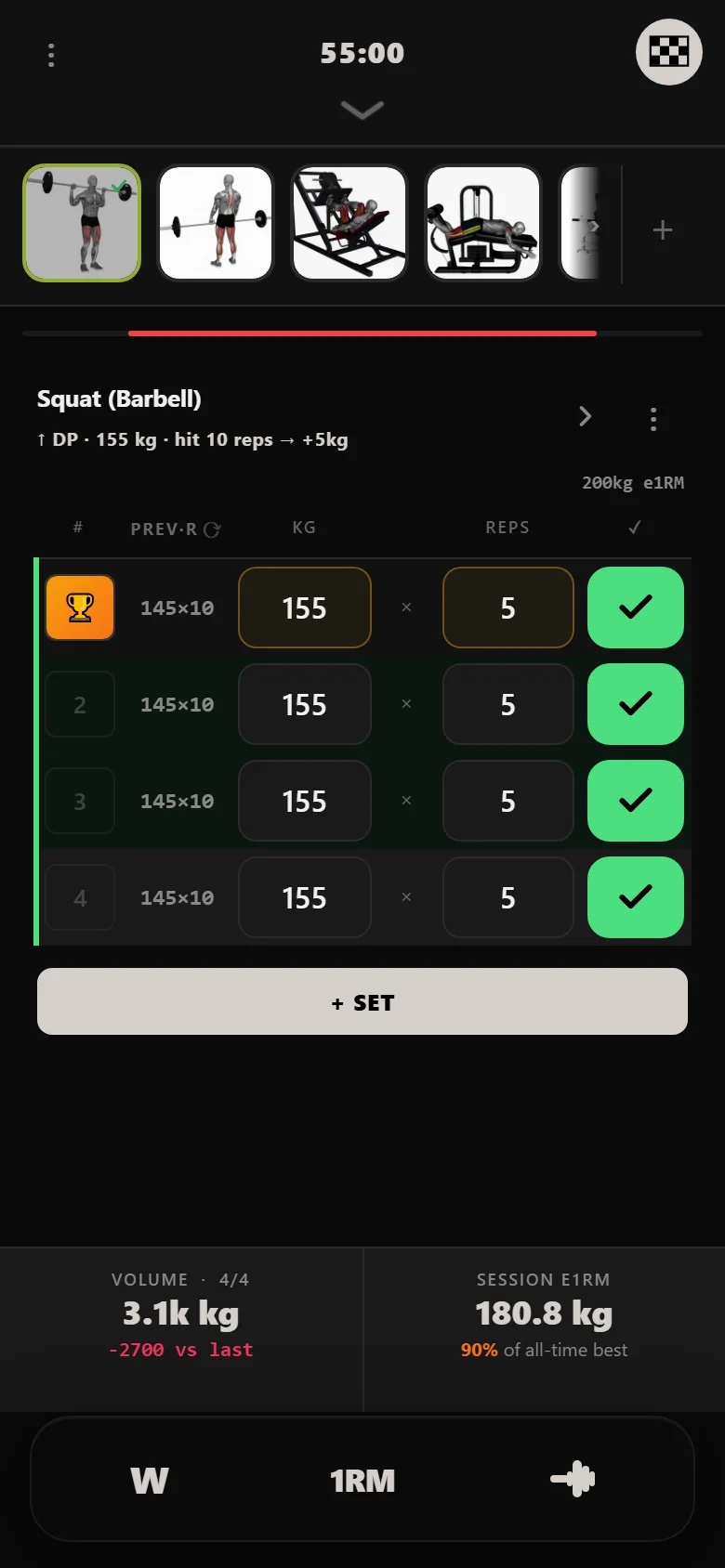
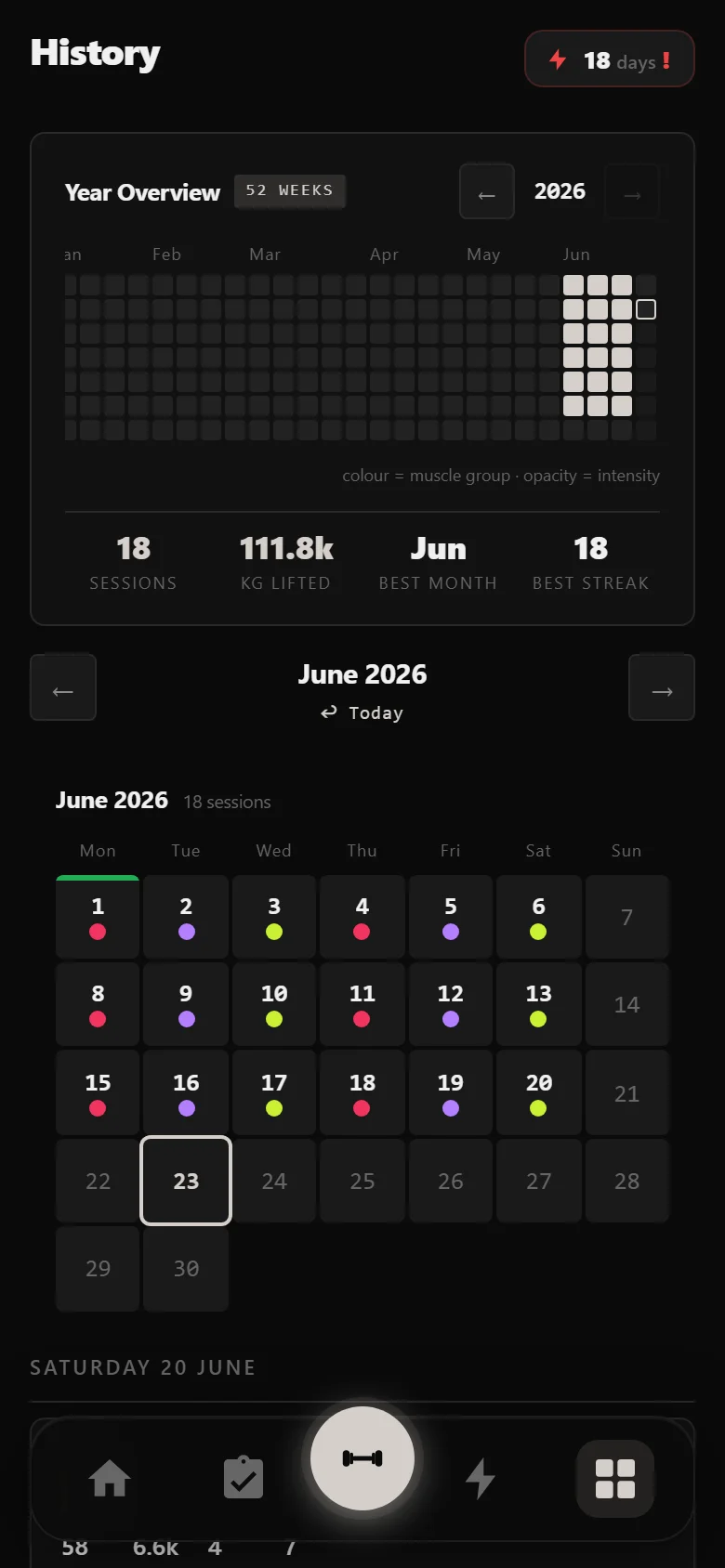
Six sessions a week fills the History calendar quickly, and the squat's own Estimated 1RM chart draws the shape of the block: a climb, a flat step where the weight held at 155 kg, then the climb resuming past it. That short plateau is what double progression looks like from the outside — the honest picture, not a line that only goes up.
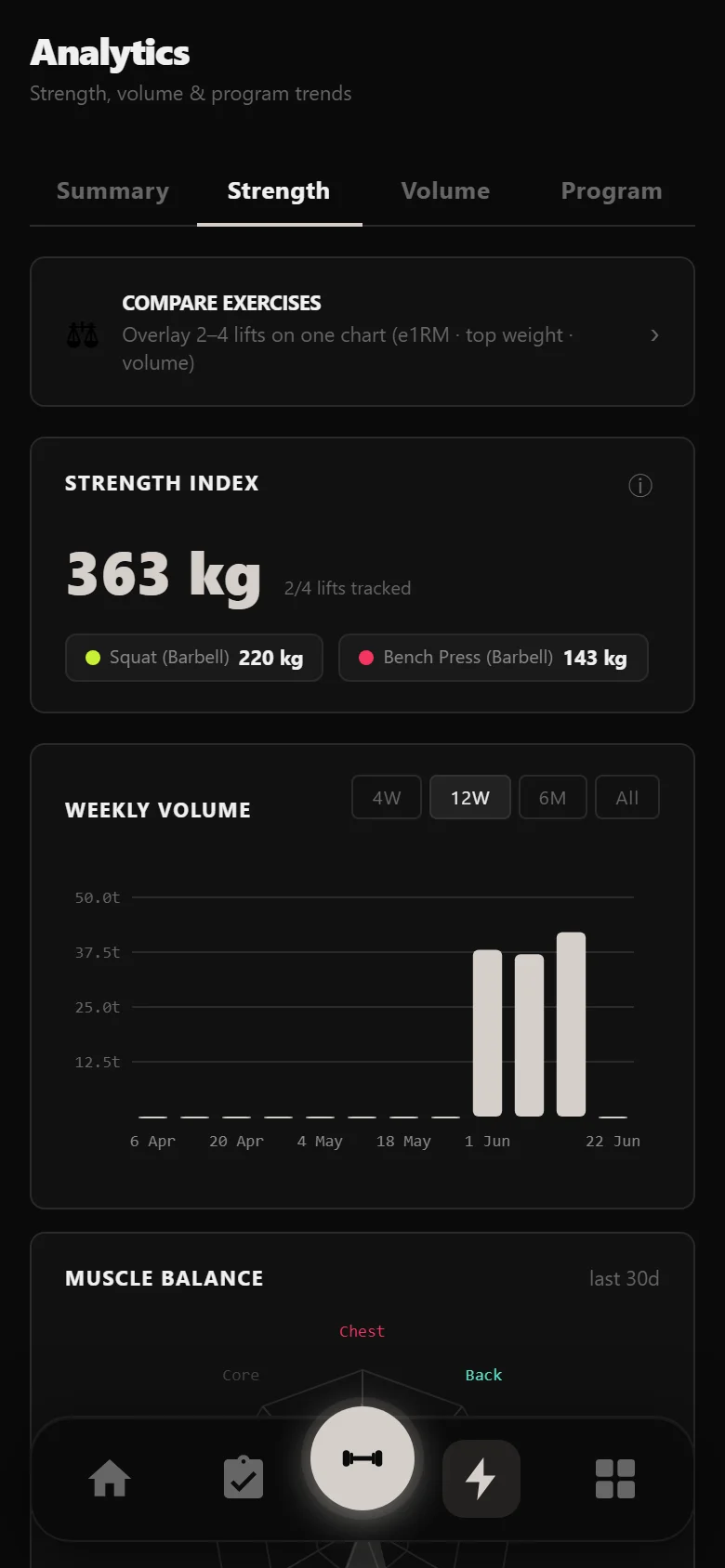
The strength view tells the wider story: it wasn't only the squat moving. Across the same three weeks the bench pressed on from 105 to 110, the row from 92.5 to 97.5, and the Arnold press itself from 30 to 32.5 — every one of them nudged along by the same rule, reading the same logged sets.
The payoff — where the squat started and finished
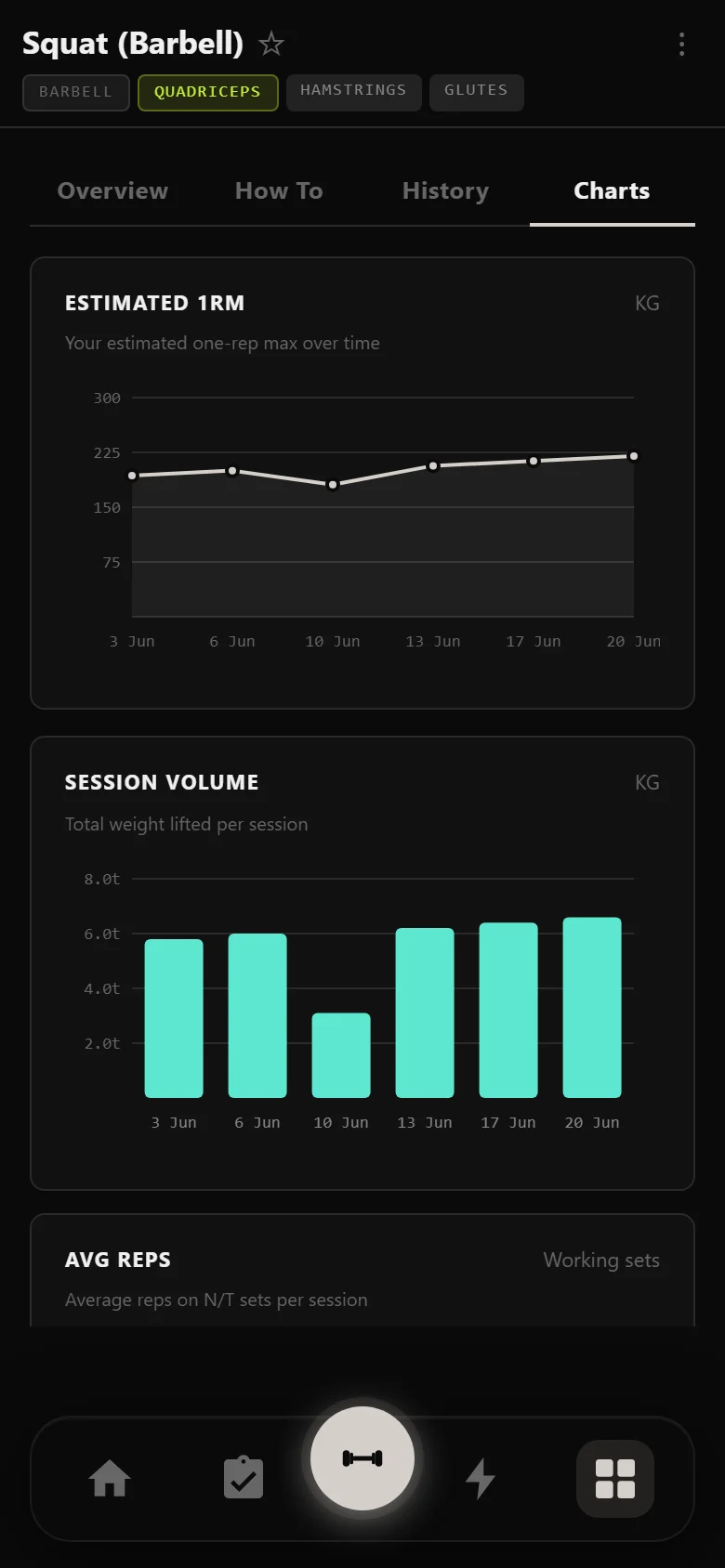
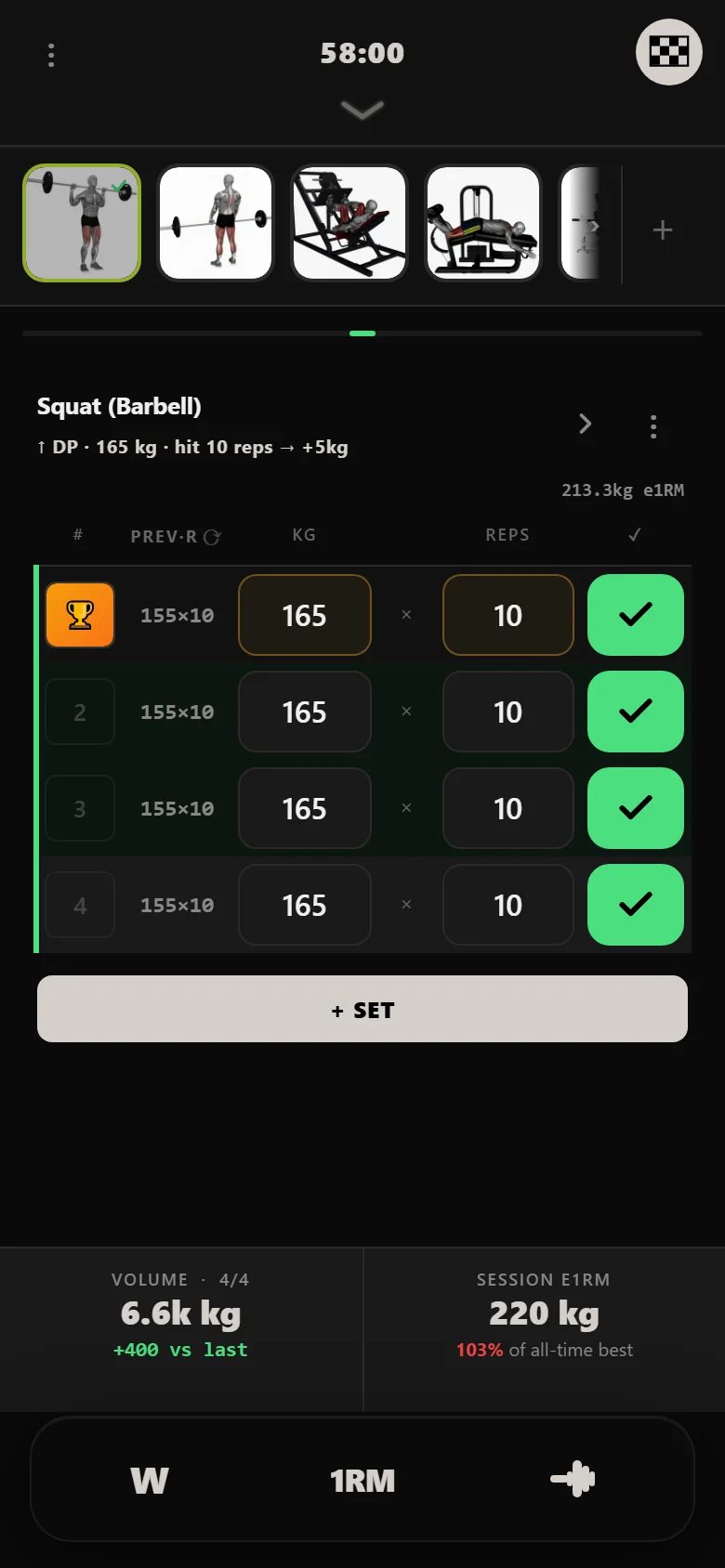
Two screenshots of the same squat, the same four sets, the same screen — the block's first Legs day and its last. It opened at 145 kg and finished at 165 kg, grinding through a stall at 155 kg on the way. Nothing in between was typed in — every weight was decided by the engine from the sets that were logged. That is the case for the app in one screen.
Same squat, start to finish — 145 kg opener to 165 kg on the block's last Legs day, with a stall at 155 kg ground through in between. Every weight decided by the app.
Common questions
What is double progression?
A rule for work prescribed in a rep range. The weight stays fixed while you add reps session to session; once every set reaches the top of the range, the weight goes up and the reps drop back to the bottom. On the Arnold Split every lift runs this way — the squat inside 6-10, the accessories inside their own ranges — and the app moves each weight for you off the sets you log.
What weight should I start with?
A weight you can already work inside the range with. Double progression gives you somewhere to go at every load — more reps before more weight — so err on the lighter side and let the range do its job. This run opens at 145 kg on the squat, an advanced lifter's numbers; yours are whatever you put on the starting-weights screen.
What happens when I miss a session?
The weight holds. If your sets fall short, DropSet keeps the weight the same for the next session rather than adding to it — you repeat the weight until you clear the range. On this run the squat missed once at 155 kg, held, and cleared it next time out.
When does the app deload me?
When you miss the same weight two sessions in a row on a lift, the app takes 10% off and lets you build back through the range. One miss is a stall you grind through — on this run the squat's single miss at 155 kg never became a second, so no deload was applied.
Is the Arnold Split too much for me?
Maybe — honestly. It is six days a week of high-volume training, built for an advanced lifter with recovery to match. If that isn't you yet, the finder will point you at a three or four day program instead; the progression engine works exactly the same way on all of them.
Is DropSet free?
Yes — DropSet is free during beta, with the full program catalogue, automatic progression maths, rest timers and PR tracking. Everything in this walkthrough is in the app.
Put it into practice
DropSet is free during beta — 50 proven programs, automatic progression, rest timers and PR tracking, all on your phone.